
Institutional Memory
Our People
The individuals documented herein have each, at various points in the firm's operational history, been classified as Essential Personnel — a designation that carries with it both a stipend adjustment and a non-disclosure agreement that has never been described to any of them as non-standard. Their contributions span eight decades, four paradigm shifts, and one incident that has since been formally reclassified. The firm is grateful. The firm is always grateful.
The Foundational Cohort
Long before a single axiom had been formally ratified — and considerably before the firm's legal entity had been registered in any jurisdiction — the individuals who would become its founding staff were already productively engaged in what internal correspondence would later classify as "pre-incorporation convergent activity." Luthien's 1944 retrospective memo observed that this period of unstructured ideation had generated more billable insight per annum than any subsequent quinquennium. This finding was not shared with investors.
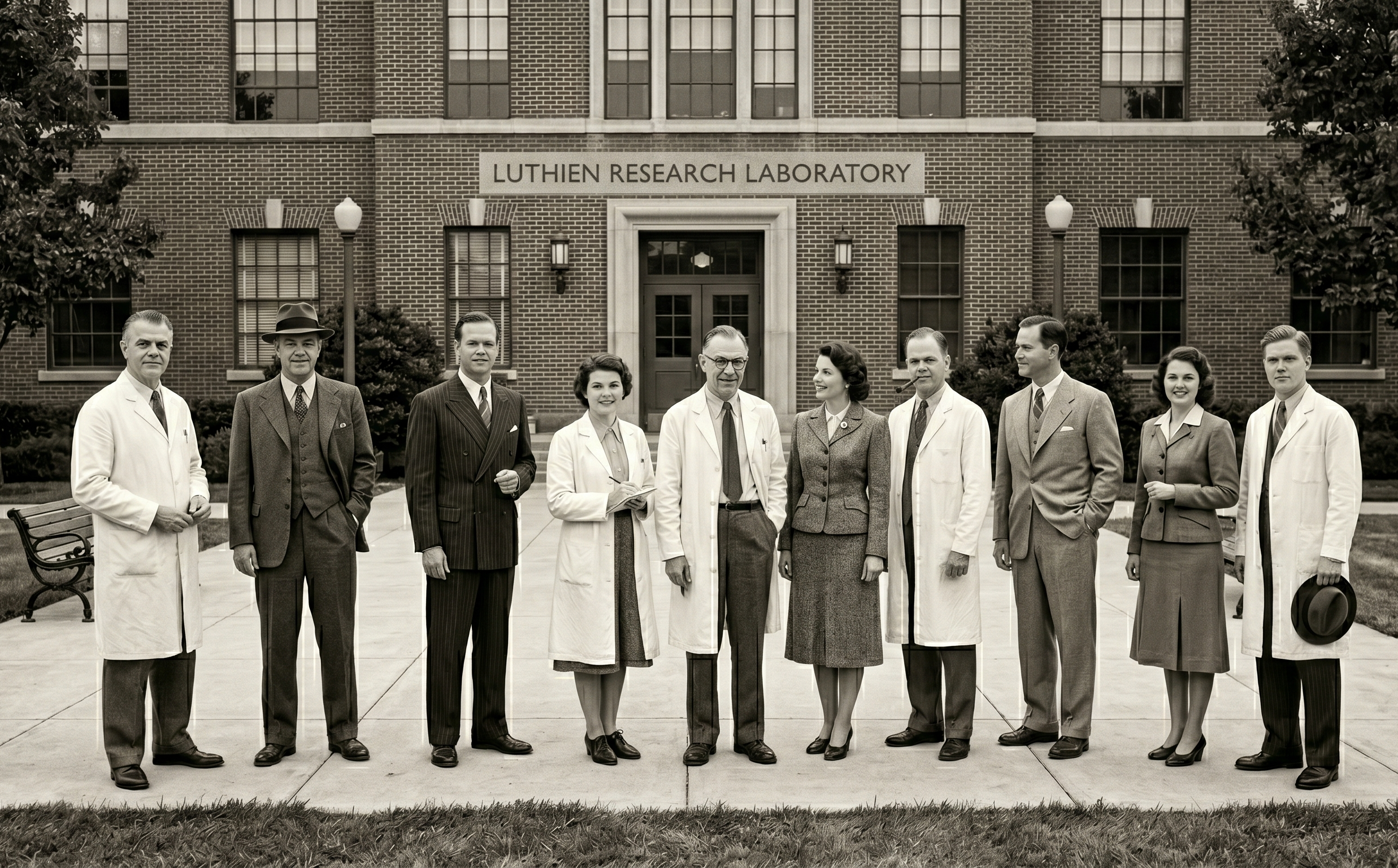
Dayton, Ohio — September 1943
The Inaugural Probabilistic Potential Task Force
Photographed approximately forty minutes before the building received its occupancy certificate, the founding cohort assembled for what internal records describe as "a brief and non-compulsory documentation exercise." Left to right: Dr. Everett Marsh (Systems Topology), Cornelius Blight (Theoretical Liaison), Harold Quincy Fenn (Axiom Drafting), Dr. Margaret Osgood (Resonance Calibration), Dr. Arthur Luthien (Founding Director), Eleanor Carver (Data Synthesis), Dr. Raymond Burr (Quantum Potential), Thomas Alcott (Field Integration), Miriam Stowell (Probabilistic Notation), Capt. James Wren (Observational Protocol). Several are identified in the 1944 white paper. One is not identified, and has not been since.
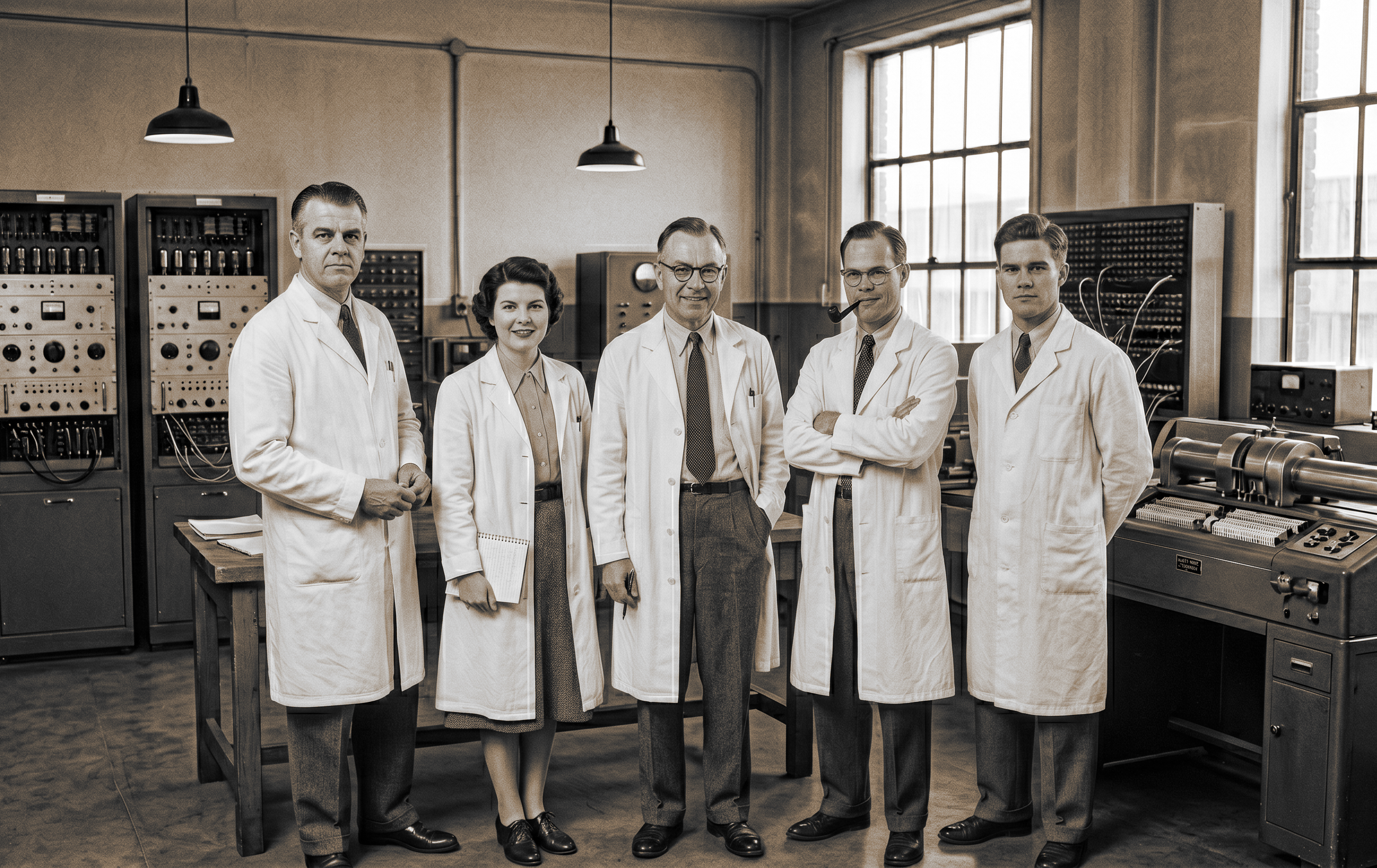
Internal Archive — circa 1945
The Core Axiom Validation Unit
Convened expressly to verify that the period's theoretical outputs were mutually incommensurable, the Unit delivered its findings eighteen months ahead of schedule. Their report — A Preliminary Taxonomy of Foundational Disagreements — remains the most-cited internal document in the firm's history, and the least-read. A commemorative reprint was issued in 1997. No copies are known to survive.
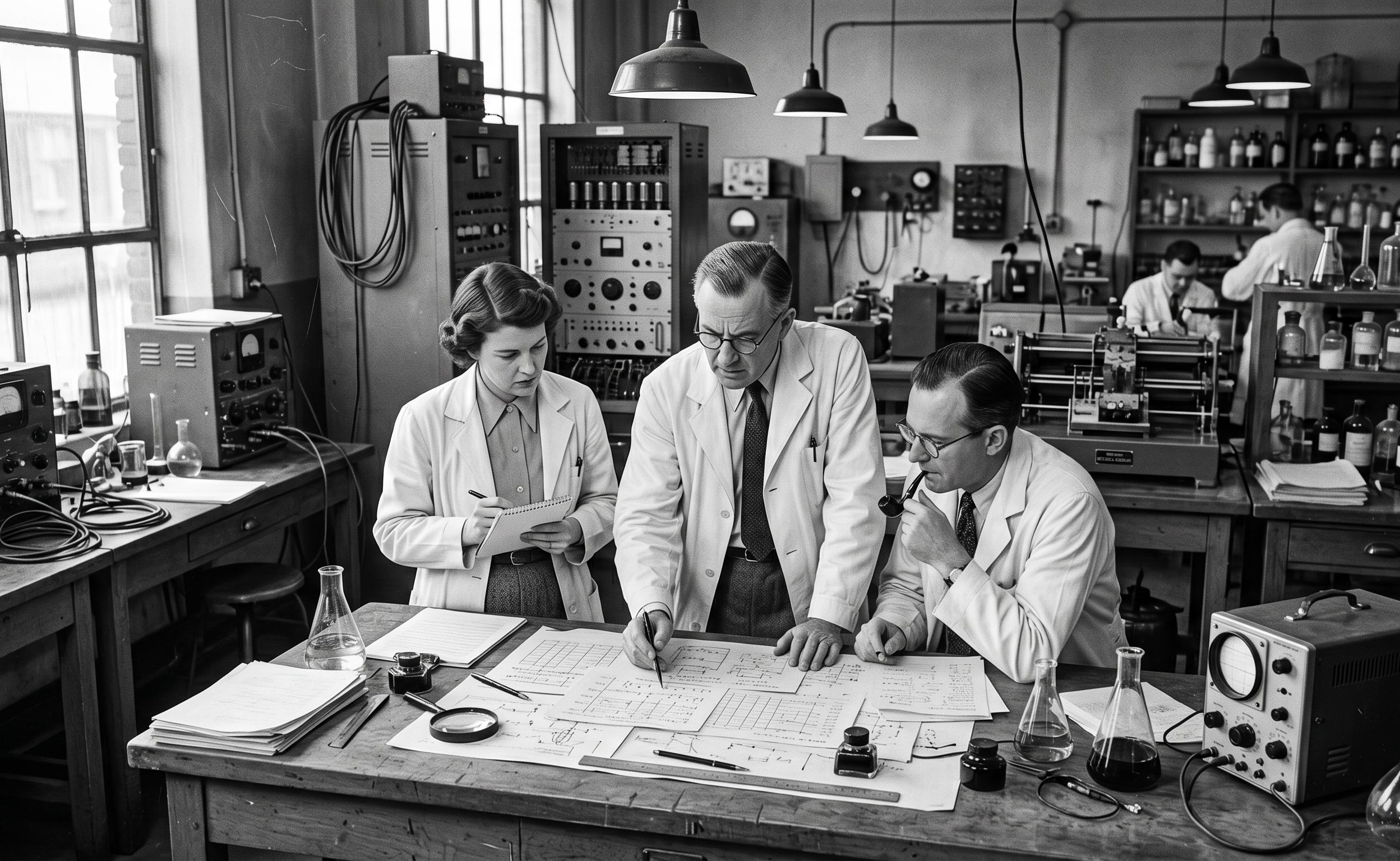
Luthien Research Laboratory — 1944
First Axiomatic Stress-Test of the Probabilistic Potential Mapping Schematic
What appears to be a set of architectural drawings is, in fact, the first hand-rendered visualisation of a complete quantum-potential field — produced over seventeen continuous hours and reviewed, per protocol, by a quorum of no fewer than two. The session log notes the presence of several beakers on the left of the workbench, appending the annotation: present but unaffiliated. No subsequent document clarifies this.
Convergence in Practice
The Geneva symposium of 1961 produced forty-two pages of proceedings, eleven unresolved methodological disputes, and one provisional framework that all forty-two attendees agreed upon in principle while disagreeing, in practice, about every component clause. The decade that followed was devoted to resolving these disputes through empirical means — a strategy that the firm's 1970 annual review described as "productive in aggregate, if not consistently in detail."
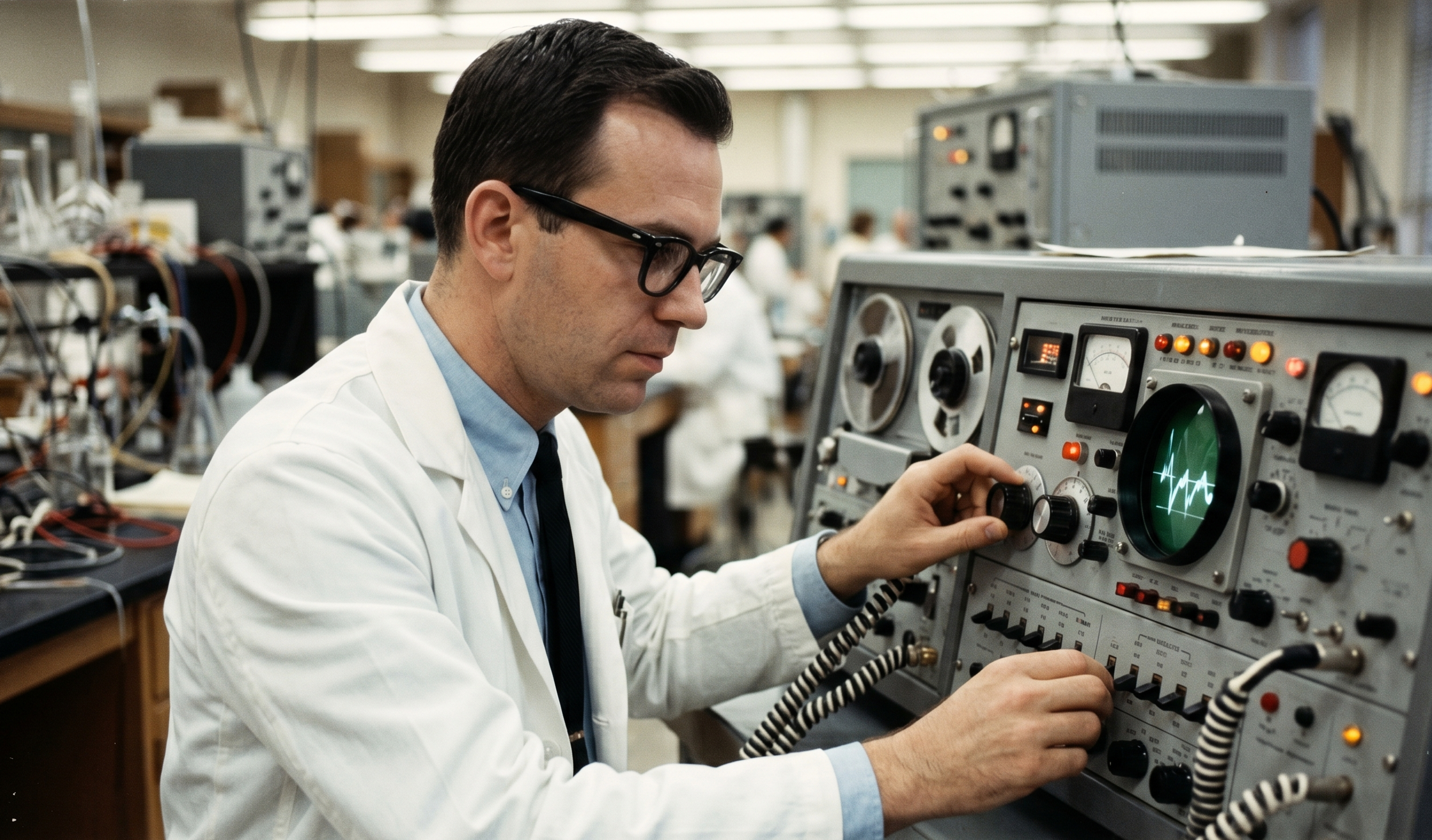
Geneva Annex — 1963
Dr. Frederick Hollis, Lead Resonance Analyst
Responsible for the sustained seventeen-system resonance demonstration that anchored the firm's 1964 technical monograph, Dr. Hollis spent eleven months calibrating the Mk. IV Systemic Resonance Detector to within tolerances that the equipment's manufacturer had explicitly stated were not achievable. The waveform visible on the oscilloscope at the precise moment this photograph was taken was subsequently trademarked. Dr. Hollis did not receive a co-credit.
Bio-Convergence Division — 1966
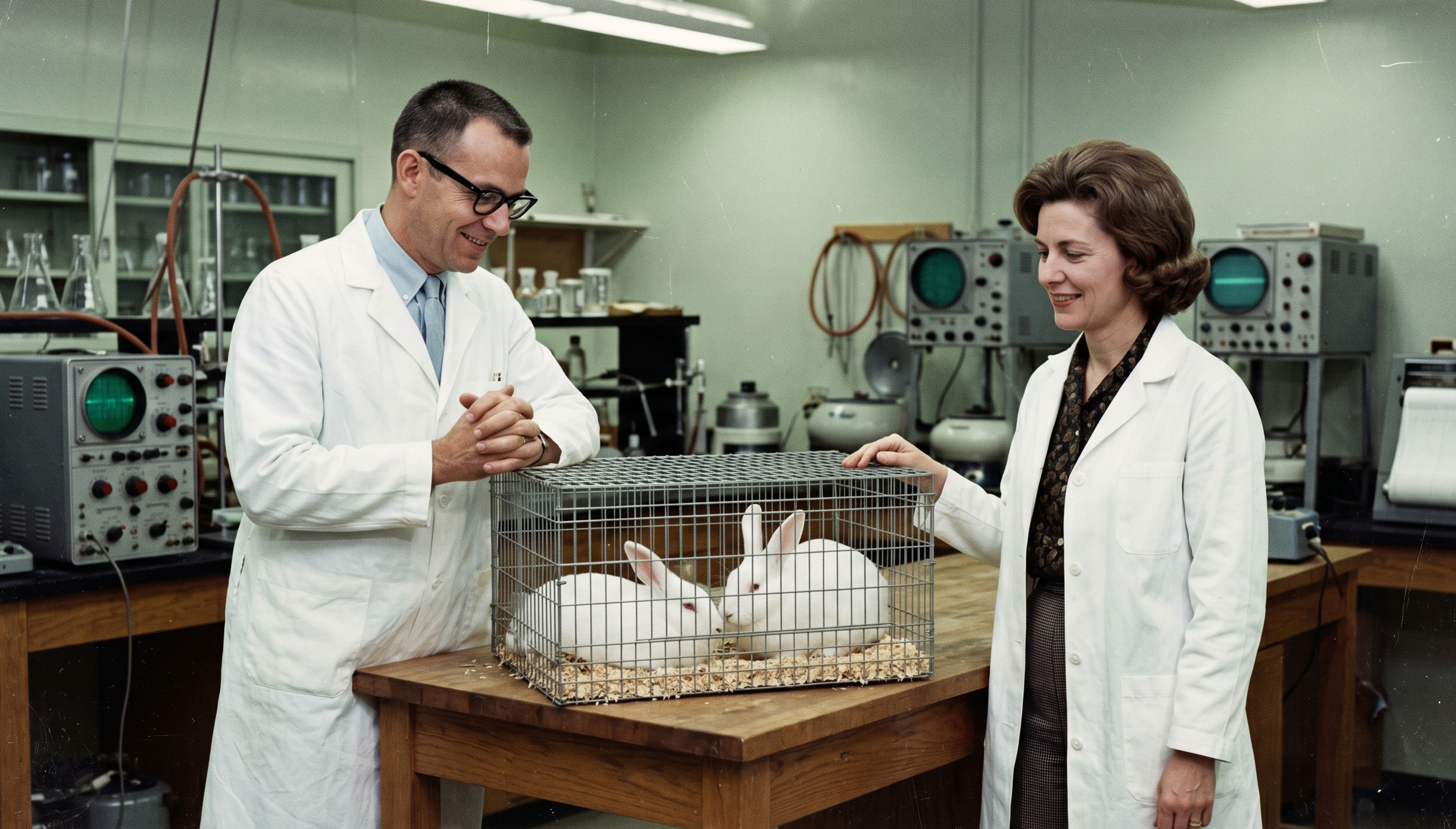
Dr. Constance Yelland & Dr. Philip Orr — Phase II Bio-Convergent Systems Pilot
Unit A and Unit B — as they were designated in all formal documentation — were recruited as organic neural proxies for the firm's investigation into bio-convergent feedback latency. Their response metrics outperformed every silicon-based alternative then available, a finding that the 1967 proceedings paper described as "strongly suggestive, independently verifiable, and impossible to publish." Both units were retired with full commendations and adequate forage.
The Field Deployment Era
By 1990, the firm's theoretical architecture was sufficiently mature to require field verification under conditions that could not be replicated in a controlled laboratory setting — specifically, conditions involving extreme cold, limited communications infrastructure, and mandatory bi-weekly reporting to a steering committee whose membership was classified. The decade is remembered internally as the Deployment Era, though at least two of its field stations remain, technically, in operation.
Svalbard Axiom Verification Station — March 1997
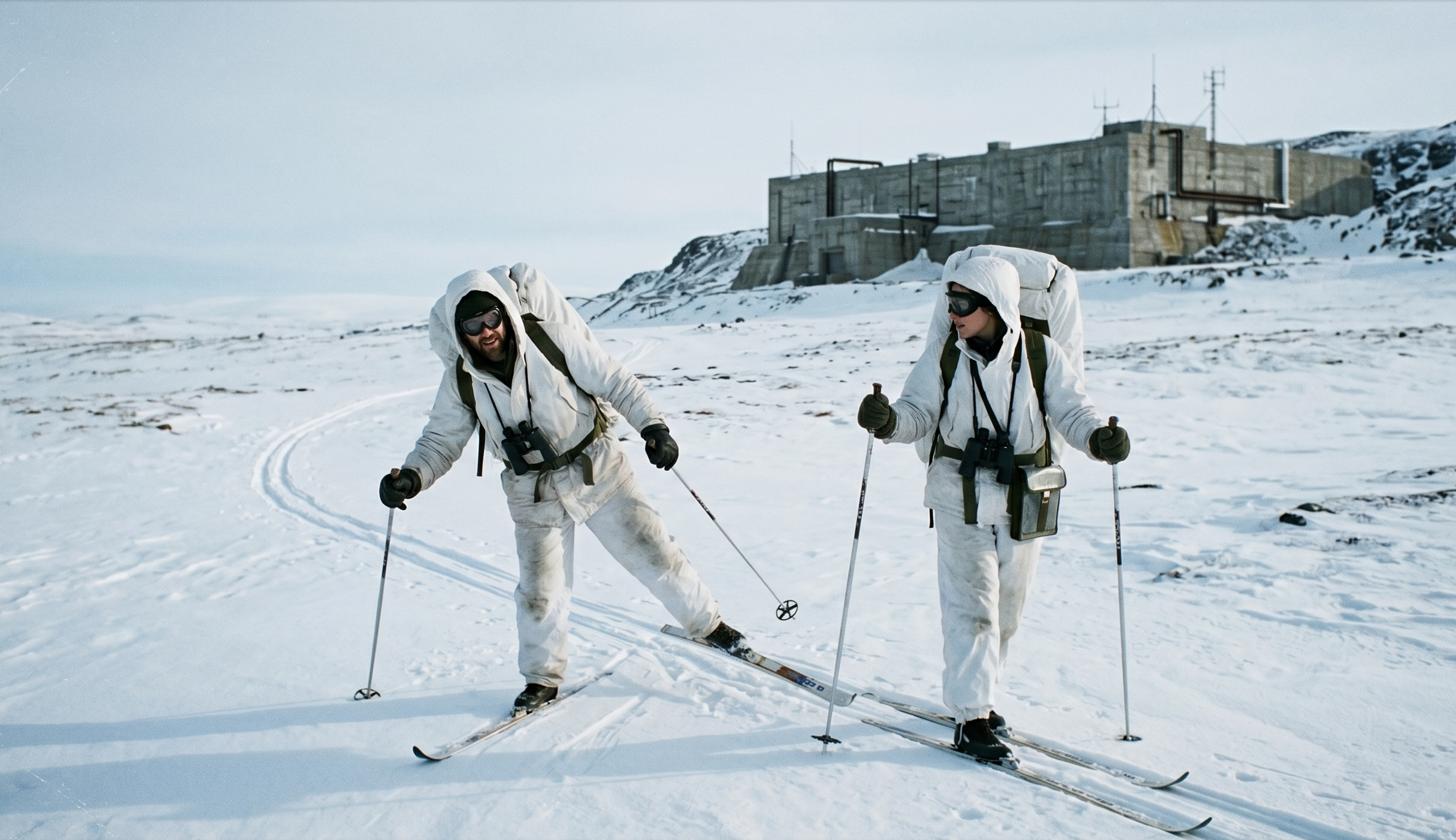
Dr. Petra Moss & Dr. Orin Veld, Field Verification Analysts
The Svalbard station — established in 1993 to exploit the Arctic plateau's exceptional resonance topography and near-total absence of interfering electromagnetic signals — required its resident analysts to maintain physical conditioning standards that the firm's legal department advised should not be described in writing as mandatory. The concrete installation visible behind them housed seventeen tonnes of proprietary resonance-capture apparatus. The skis were standard issue. The smiles were not.
Observation Post 3, Svalbard — 1997
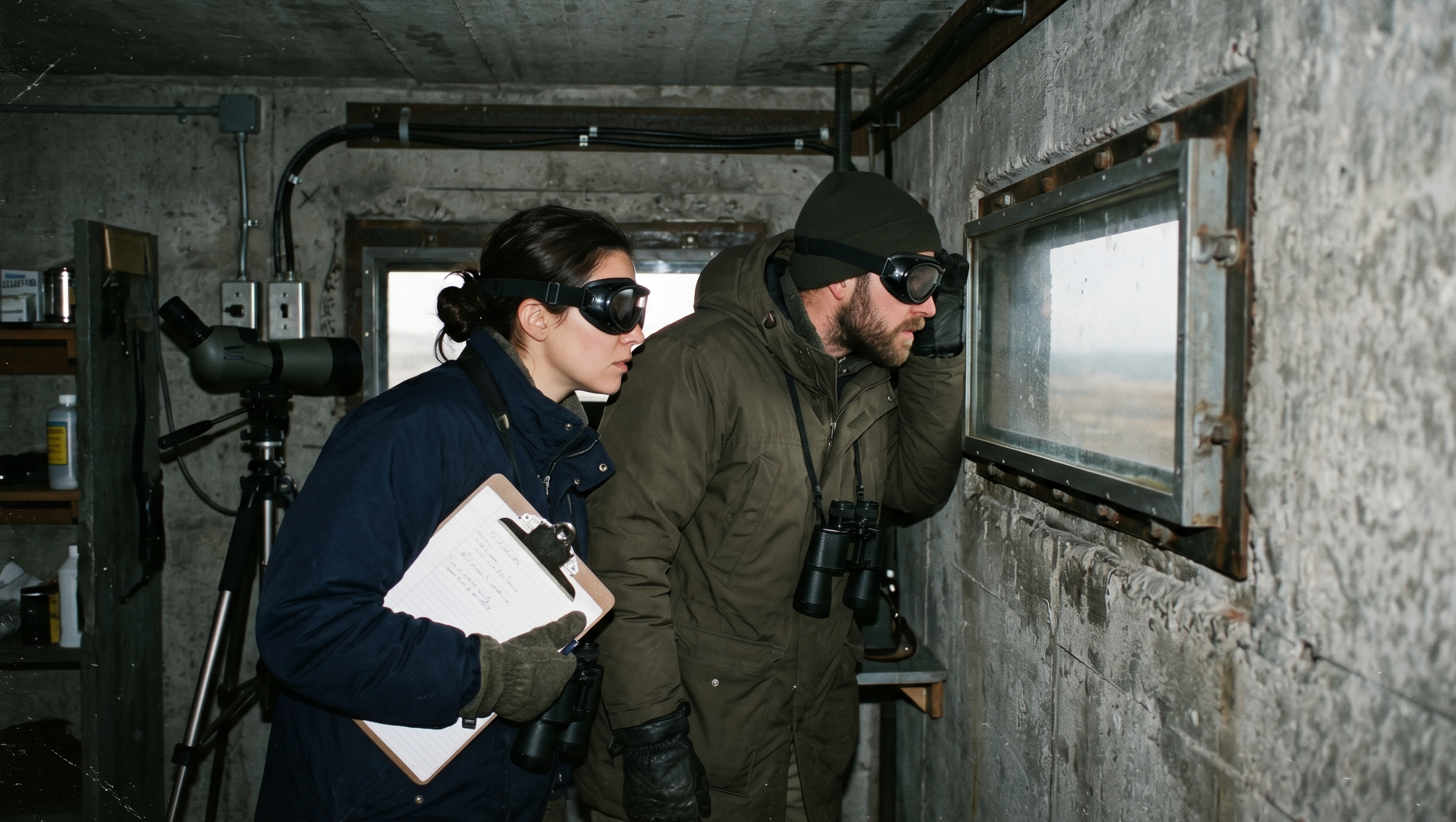
Monitoring the Northern Resonance Perimeter
Standard field protocol required two-person verification of all anomalous resonance events — a precaution introduced following the 1991 incident, which the firm's institutional history references only as "the recalibration that necessitated recalibration." The protective eyewear was calibrated to detect spectral frequencies outside the visible range. The binoculars were not.
Dayton Facility — October 1994
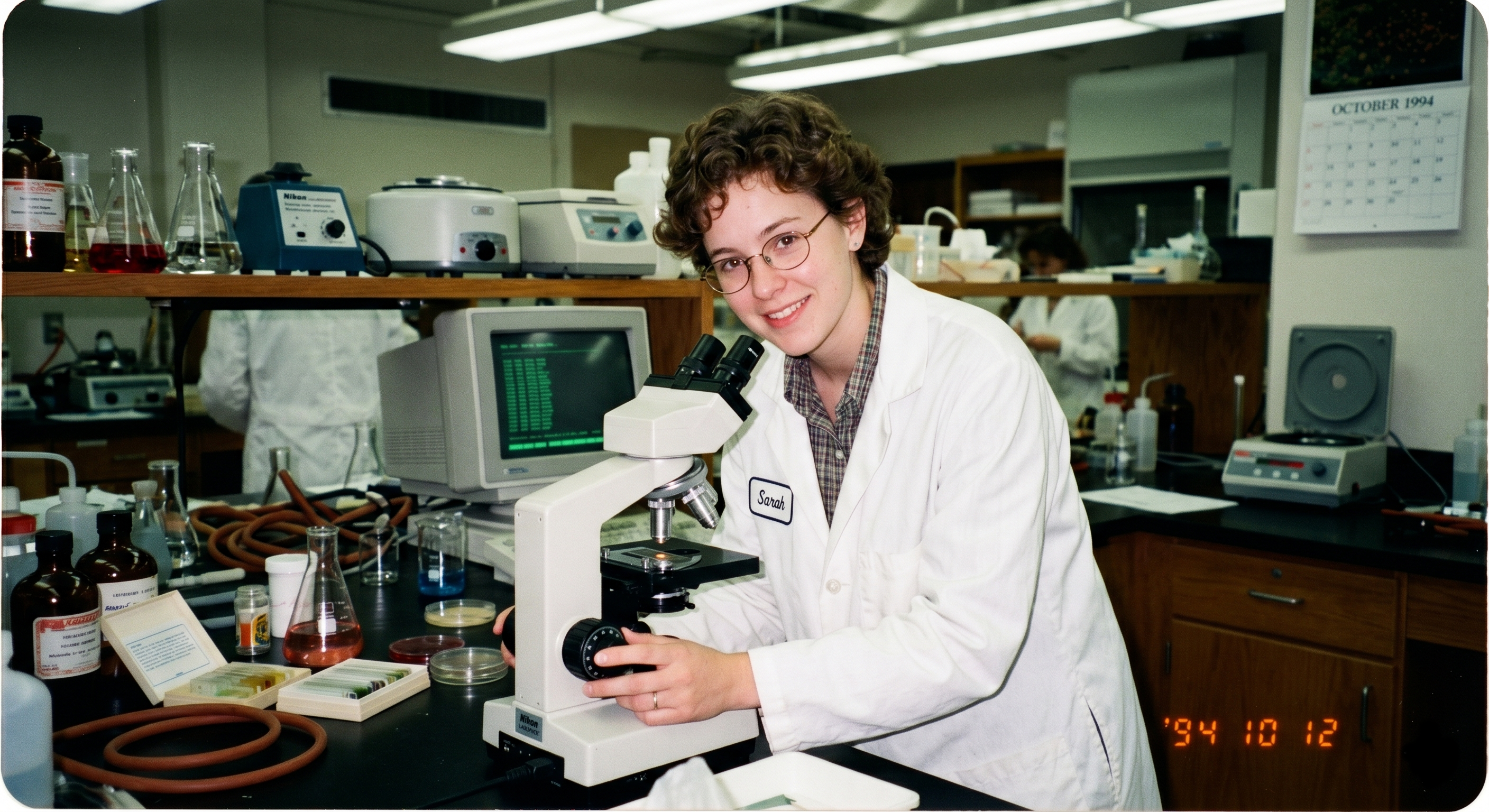
Dr. Sarah Soral, Junior Resonance Analyst
Recruited directly from her doctoral programme, Dr. Soral brought to the firm an approach to sub-millimetre quantum-potential quantification that her supervisor had described as "methodologically unorthodox and empirically difficult to argue with." Her subsequent work on micro-scale resonance verification contributed three of the eleven core modules of the Synergistic Development Framework™, for which she received a certificate of acknowledgement dated 1998. She was also given a mug.
Luthien Labs